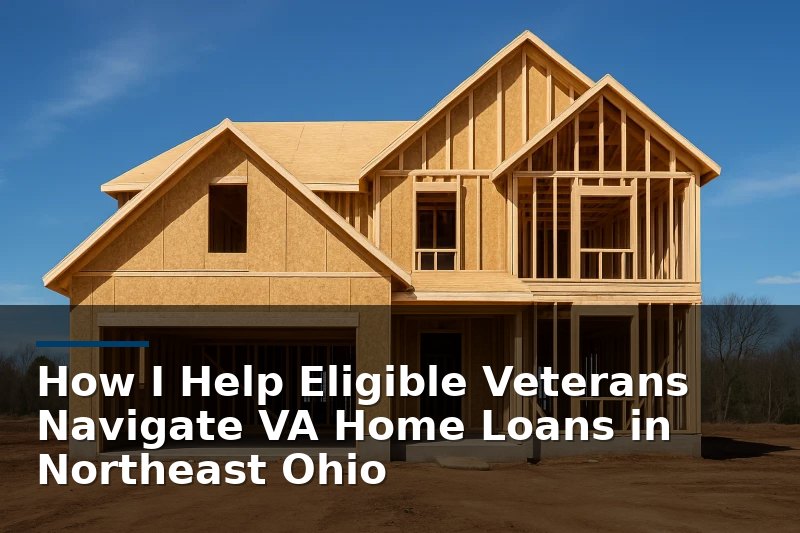
Honoring Veterans Through Informed Homeownership As we approach Veterans Day on November 11, it’s a…
FHA vs. VA Loans: How to Choose the Right Mortgage

Choosing between an FHA loan and a VA loan can feel difficult, especially when both offer flexible paths to financing a home.
FHA loans are government-insured mortgages with flexible credit and down payment guidelines, while VA loans are government-backed mortgages available to eligible service members, veterans, and certain surviving spouses.
In this guide, I’ll explain how FHA and VA loans work, where they differ, and what borrowers should review before choosing one.
Key Takeaways
- Eligibility: FHA loans are broadly available, while VA loans require qualifying military service or another eligible status.
- Down Payment: FHA financing commonly starts at 3.5% down, while eligible VA borrowers may qualify with 0% down.
- Mortgage Insurance: FHA loans include mortgage insurance, while VA loans do not require monthly mortgage insurance.
- Property Use: Both programs are generally intended for a borrower’s primary residence.
- Best Fit: The right choice depends on eligibility, cash available, credit, monthly payment, property condition, and long-term plans.
Quick Answers About FHA and VA Loans
- Can anyone apply for an FHA loan? FHA loans are available to eligible borrowers who meet the lender’s credit, income, occupancy, and property requirements.
- Are VA loans only for first-time homebuyers? No. Eligible borrowers may use VA financing more than once, subject to entitlement and current program rules.
- Do both loans require an appraisal? Yes. FHA and VA financing generally require an appraisal completed under the applicable program standards.
- Which loan has the lower monthly payment? It depends on the loan amount, current market rates, mortgage insurance, taxes, homeowners insurance, and other details.
I’m David Goldberg (NMLS# 728872), and I’ve spent 24 years helping borrowers compare mortgage structures instead of looking at one feature in isolation. I’m based in Cleveland and lend nationwide through The Goldberg Mortgage Team.
That comparison matters here.
A VA loan may offer 0% down and no monthly mortgage insurance. An FHA loan may be available when VA eligibility does not apply or when the borrower’s financial profile works better within FHA guidelines.
Let’s look at the whole picture.
What Is an FHA Loan?
An FHA loan is a mortgage made by an approved lender and insured by the Federal Housing Administration. Because of that insurance, lenders can often offer more flexible qualification standards than they might with certain conventional loans.
As of 2026, FHA loans commonly allow a minimum down payment of 3.5% for borrowers who meet the applicable credit guidelines. Credit standards, debt-to-income limits, and lender overlays can vary.
FHA financing may be worth considering when a borrower has:
- Limited funds available for a down payment
- A credit profile that may not fit a conventional loan as well
- Gift funds or eligible assistance contributing toward the transaction
- A primary residence that meets FHA property standards
- No eligibility for VA financing
FHA loans include upfront and annual mortgage insurance. The annual portion is generally included in the monthly payment, and how long it remains can depend on the original loan structure and current FHA rules.
You can read more about the basic structure on my FHA home loan page.
What Is a VA Loan?
A VA loan is a mortgage backed by the U.S. Department of Veterans Affairs for borrowers who meet the program’s eligibility requirements. The loan is issued by a private lender, not directly by the VA in most purchase transactions.
VA eligibility may extend to qualifying active-duty service members, veterans, National Guard or Reserve members, and certain surviving spouses. A Certificate of Eligibility helps document that eligibility, but it does not replace the lender’s financial review.
VA financing may provide:
- Up to 100% financing for eligible borrowers
- No required monthly mortgage insurance
- Flexible credit evaluation
- Limits on certain closing costs
- The ability to reuse the benefit when entitlement is available
Many VA loans include a funding fee. The amount varies based on the loan purpose, down payment, prior use of the benefit, and whether the borrower qualifies for an exemption.
VA lenders also review residual income, which looks at the money remaining after major monthly obligations. This is an important difference from programs that focus more heavily on debt-to-income ratio alone.
FHA vs. VA Loans: The Main Differences
| Feature | FHA Loan | VA Loan |
|---|---|---|
| Eligibility | Open to borrowers who meet FHA and lender guidelines | Limited to borrowers with qualifying military-related eligibility |
| Minimum Down Payment | Commonly 3.5% with qualifying credit | May allow 0% down with sufficient entitlement |
| Monthly Mortgage Insurance | Required in most cases | Not required |
| Upfront Program Cost | Upfront mortgage insurance generally applies | A funding fee may apply unless the borrower is exempt |
| Occupancy | Generally requires a primary residence | Generally requires a primary residence |
| Loan Limits | FHA limits vary by county | Rules depend on entitlement, loan size, and lender guidelines |
Rates, fees, limits, and qualification rules can change. Borrowers should verify current information with a lender before making a decision.
How I Compare FHA and VA Financing
I don’t start by assuming one program is automatically better.
I start with the borrower.
1. Confirm VA Eligibility and Entitlement
If a borrower may qualify for VA financing, I first review the Certificate of Eligibility and available entitlement. Previous use of a VA loan does not necessarily prevent another use, but an existing VA loan or prior claim can affect the available benefit.
If VA eligibility does not apply, FHA may still provide a practical option.
2. Compare Cash Needed at Closing
The down payment is only one part of the calculation. Closing costs, prepaid taxes, homeowners insurance, required reserves, seller credits, and program fees can all affect the final amount needed.
This is especially important for move-up buyers who are deciding whether to sell their current home first or purchase before that sale is complete. Depending on the situation, a bridge home loan may also be part of the discussion.
3. Review the Complete Monthly Payment
A mortgage payment may include principal, interest, property taxes, homeowners insurance, mortgage insurance, and association dues when applicable.
VA financing does not require monthly mortgage insurance, which can make a meaningful difference. But the interest rate and total loan amount still matter.
Before you make that decision, let’s run the numbers.
4. Look at Credit, Debt, and Residual Income
FHA and VA loans can both be flexible, but they do not evaluate every file in the same way.
FHA underwriting commonly focuses on credit history, debt-to-income ratio, income stability, assets, and payment history. VA underwriting reviews many of the same items, while also placing importance on residual income.
Automated underwriting findings and lender requirements can affect the documentation needed. Not every borrower fits neatly into the standard mortgage box.
5. Consider the Property
Both FHA and VA appraisals address value and program-specific property standards. An appraisal is not the same as a home inspection, and buyers may still choose to obtain an independent inspection.
Peeling paint, damaged flooring, missing safety features, or incomplete repairs may create additional steps. The specific response depends on the property, appraiser, loan program, and lender.
This can matter with older housing throughout Greater Cleveland, including properties in Cuyahoga County, Lake County, Geauga County, Summit County, Lorain County, and Medina County.
6. Review the Borrower’s Long-Term Plans
I also ask how long the borrower expects to keep the home and the mortgage.
An FHA borrower may eventually consider refinancing into a conventional loan if the numbers support removing mortgage insurance. A VA borrower may later use a VA interest rate reduction refinance loan if eligible and if the transaction provides the required benefit.
Neither future option should be assumed. Property value, credit, income, equity, market rates, and guidelines may all change.
When an FHA Loan May Make More Sense
An FHA loan may be the stronger option when:
- The borrower does not have VA eligibility
- The borrower has a smaller down payment
- The credit profile fits FHA guidelines more comfortably
- Gift funds or eligible down payment assistance will be used
- The borrower wants to compare FHA against conventional financing
FHA financing is not limited to first-time homebuyers. It can be used by repeat buyers as long as the transaction meets occupancy and other program requirements.
When a VA Loan May Make More Sense
A VA loan may deserve a close look when:
- The borrower has confirmed VA eligibility
- Preserving cash is an important goal
- The borrower wants to avoid monthly mortgage insurance
- The property will be used as a primary residence
- The borrower’s income, credit, and residual income meet current guidelines
The 0% down feature gets a lot of attention. Understandably so.
But a borrower can choose to make a down payment on a VA loan. Doing so may reduce the loan balance and, in some situations, affect the funding fee.
How Sellers May View FHA and VA Offers
Some buyers worry that an FHA or VA offer will automatically be less competitive. That is not necessarily true.
A clear pre-approval, realistic timeline, complete documentation, and communication between the lender and real estate professionals can all matter. Property condition should also be reviewed before the offer is written, particularly if visible repairs may be required.
No financing structure can control a seller’s decision. The goal is to understand the loan, prepare the file, and avoid surprises where possible.
Choosing Between FHA and VA Financing
Which loan structure makes the most sense?
For an eligible borrower, VA financing may offer important advantages, especially 0% down and no monthly mortgage insurance. But FHA financing can still be appropriate when eligibility, credit, property details, or the overall financial structure point in that direction.
I recommend comparing both options side by side when both are available. Look at cash needed, total monthly payment, upfront costs, long-term costs, and the requirements attached to each program.
If you’re buying in Northeast Ohio or elsewhere nationwide, I invite you to call, text, or email me. I can review your scenario, compare available options, and explain the next steps for pre-approval planning.
Frequently Asked Questions
Can I use an FHA or VA loan to buy a multi-unit property?
Both programs may allow an eligible multi-unit property when the borrower occupies one unit as a primary residence. The property, rental income, appraisal, reserves, and underwriting must meet current program and lender guidelines.
Can closing costs be included in an FHA or VA purchase loan?
Most purchase closing costs are not simply added to the base loan amount, although certain program fees may be financed. Seller credits, lender credits, gift funds, and assistance programs may help, subject to current limits and guidelines.
What happens if the FHA or VA appraisal identifies repairs?
The appraiser may require certain repairs to be completed before closing, depending on the issue and program rules. The buyer, seller, lender, and real estate professionals can review the available options, but completion and reinspection may affect the timeline.
Can self-employed borrowers qualify for FHA or VA financing?
Yes, self-employed borrowers may qualify when their income can be documented under the applicable guidelines. Lenders commonly review tax returns, business history, year-to-date financial information, and the stability of ongoing income.
Can I refinance from an FHA loan into a VA loan later?
An eligible borrower may be able to refinance an FHA loan into a VA loan if the new loan meets VA requirements and provides the required financial benefit. Credit, income, occupancy, entitlement, property value, closing costs, and current market rates will affect the decision.
This is educational and not financial advice. Loan programs and guidelines can change. Talk with a licensed mortgage professional about your specific scenario.

About the Author
David Goldberg
VP of Mortgage Lending at The Goldberg Mortgage Team · NMLS #728872
David Goldberg, a Cleveland based mortgage expert who helps first-time buyers, move-up homeowners, self-employed borrowers, real estate investors, Physicians, Veterans, and retirees find creative mortgage solutions throughout Northeast Ohio, Southeast Florida, and across the entire US. David has led The Goldberg Mortgage Team powered by Mutual of Omaha Mortgage since 2004.
Specializes in: Non-QM, Jumbo, Conventional
Licensed in: AL, AK, AZ, AR, CA, CO, CT, DE, FL, GA, HI, ID, IL, IN, IA, KS, KY, LA, ME, MD, MA, MI, MN, MS, MO, MT, NE, NV, NH, NJ, NM, NC, ND, OH, OK, OR, PA, RI, SC, SD, TN, TX, UT, VT, VA, WA, WV, WI, WY
Related Posts